Molotschna women’s manifesto
Women TalkingThe Molotschna women’s manifesto is the collective statement of purpose formed as the women weigh whether to remain in Molotschna Colony or leave. Its three principles—keeping their children safe, remaining steadfast in faith, and being able to think—join practical protection to religious conviction and intellectual independence. The manifesto matters because it recasts departure not as a rejection of faith but as the women’s considered attempt to live by it.
Formation and Three Principles
The statement takes shape during a meeting in which the women define what they want and believe themselves entitled to. Mariche gives the aims their clearest formulation. Though she is crying softly and finding it difficult to speak, she continues: the women want their children to be safe, to remain steadfast in their faith, and to think. Her words move the discussion from a choice between staying and leaving toward an account of what the women are trying to preserve, whatever they decide.
Salome responds that the formulation is not quite precise, but sounds like a perfect beginning. Ona then recognizes it as a manifesto and as the beginning of a new era. The exchange marks a change in the meeting’s language: the women are no longer only comparing options but articulating a shared set of principles by which those options can be judged. The manifesto is presented as a beginning rather than a completed program.
Faith, Pacifism, and the Case for Leaving
The women’s religious reasoning is central to the manifesto. Agata argues that remaining in Molotschna would place the women in direct collision with violence, whether they inflicted it or suffered it. In her view, staying would risk turning the colony into a battlefield and would violate the Mennonite commitment to pacifism. The choice to leave is therefore framed not as a retreat from religious obligation but as a way of avoiding a situation in which violence could make that obligation impossible to uphold.
Agata also connects departure to love, forgiveness, and the women’s responsibility for their children. If they stay after acknowledging that some of them want to kill their attackers, she argues, the forgiveness they could offer would be coerced rather than genuine. Leaving, by contrast, could allow them to pursue pacifism, love, and forgiveness without remaining in immediate conflict, while teaching their children that these values take precedence over their fathers’ expectations. The manifesto’s commitment to faith is thus expressed through a practical decision about where the women and children can live.
Independent Judgment and Biblical Authority
The manifesto also challenges who has the authority to interpret religious teaching. Salome points out that the women cannot read the Bible for themselves, and that their belief that wives must submit to husbands rests on what their husbands have told them the Bible commands. Her argument does not claim that the women have mastered a text they cannot read; instead, it identifies how restricted access to scripture makes it difficult for them to verify claims used to demand their obedience.
This concern gives particular force to the manifesto’s insistence that the women want to think. Their judgment is presented as collective and accountable to their faith, rather than as a simple rejection of it. Agata describes their decision as one made together, in light of their understanding of faith, love, peace, and what is best for their children. She joins instinctive maternal care with intellect and spiritual life, treating their reasoning as part of their moral responsibility.
From Principles to Collective Action
The manifesto takes shape under immediate pressure. The colony’s men have gone to the city to post bail for the imprisoned attackers, hoping they can return to Molotschna while awaiting trial. Peters has told the women that they will be expected to forgive the men; refusing, he says, would mean leaving the colony for an outside world they know nothing about. The women have only two days to organize a response. Against this imposed choice between forgiveness and expulsion, the manifesto supplies their own terms for deciding what comes next.
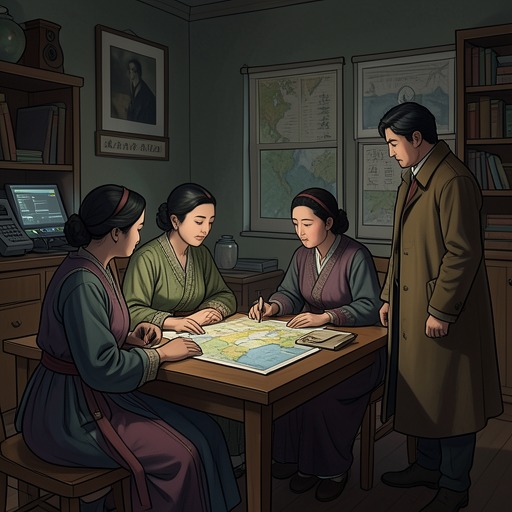
Those terms lead toward a specific plan. The women agree to leave after dark so that they will not be seen passing the Chortiza Colony and Hiakjeke Colony. The decision is made amid warnings that the Koop brothers may try to alert the men or prevent the women from leaving, including by using a false report of fire to direct them toward a trap. Practical preparations accompany the principles: August Epp reports obtaining the co-op safe, dynamite, and a world map, and describes packing onions, soap, and pieces of wood for traction or kindling. The manifesto therefore links a statement of collective aims to the arrangements required to act on them. Its three principles make departure legible as a decision about safety, faith, and thought, rather than simply a movement away from home.